
November marks the start of slower days, colder mornings, and food that finally matches the season—warm, grounding, and nourishing. This post is for those who want to care for their bodies in a natural way, not through supplements or trends, but by eating what the earth is naturally providing right now.
In this guide, we’ll explore why seasonal eating matters, the fruit and vegetables that best support your body this month, and simple meal ideas that make clean, healthy eating feel effortless. From immune-boosting greens to root vegetables rich in natural energy, this is about aligning your plate to support your health, hormones, digestion and overall wellbeing through whole, honest food.
Seasonal eating isn’t old-fashioned. It’s intentional, sustainable, and one of the easiest ways to feel better from the inside out.
Why eat seasonally?
- Fresher food means more nutrients
- Fewer chemicals and preservatives
- Natural support for your bodies needs
- Better digestion and immune system support
- Encourages mindful eating
- Supports a diverse and balanced die
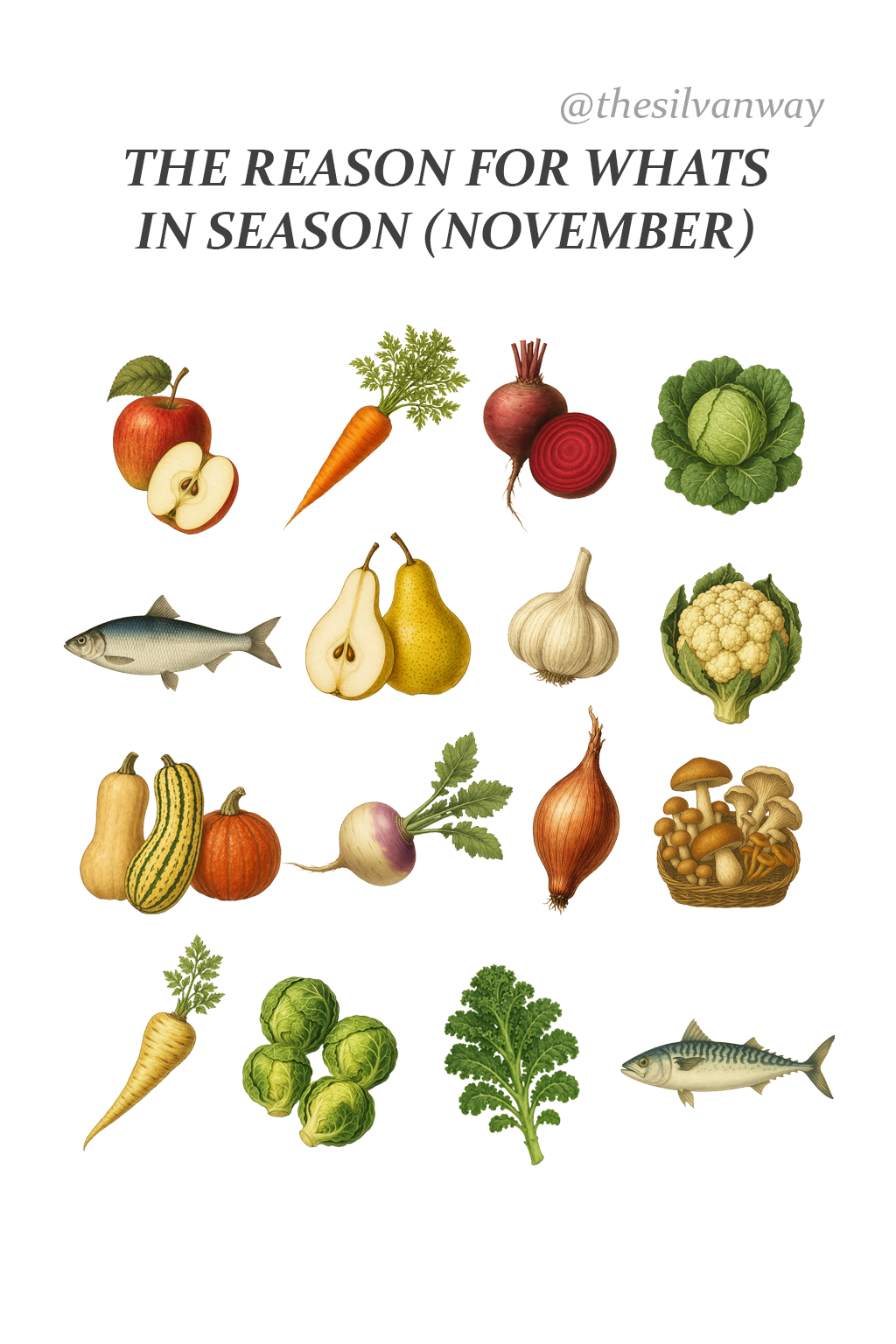
The reason for what’s in season

Turnips – Rich in Vitamin C, Turnips help strengthen the immune system just as winter approaches, supporting the body’s natural defenses against the cold.

Parsnips – Naturally energizing, parsnips are full of complex carbs that provide slow, steady energy – ideal for shorter days when we need sustained nourishment.

Cauliflower – Source of B Vitamins and Choline, these nutrients support brain function and energy metabolism, maintaining clarity and focus through the day.

Kale – Abundant in vitamin K and Calcium, essential for bone health, especially when sunlight (Vitamin D) is in shorter supply.

Brussels sprouts – Supportive of natural detoxification, the sulphur-containing compounds assist the liver in its natural cleansing processes.

Apple – Hydrating and cleansing, the high water content and natural acidity is great at assisting the body after heavier seasonal meals.

Pear – Full of vitamins and minerals, they provide Vitamin C for immunity, potassium for heart health, and small but meaningful amounts of copper and antioxidants.

Mushrooms (Oyster, Winter Chanterelles, Velvet Shanks) – One of the few plant-based foods that contain Vitamin D, an essential nutrient as daylight wanes and more time is spent indoors.

Mackerel – Packed with B Vitamins, especially Vitamin B12, supporting energy production and helps combat fatigue.

Herring – Abundant in Omega-3 fatty acids, which helps support heart health, reduce inflammation, and help maintain mental clarity.
Sample meals
Baked Mackerel with Roasted Root Vegetables & Lemon
- 4 Mackerel fillets / 2 whole fish
- 2-3 Carrots, 2 Parsnips, 1 Beetroot
- 1 Red onion
- 3-4 Garlic cloves
- 1 Lemon (juiced)
- Fresh thyme/rosemary
- 2-3 tbsp olive oil, salt, pepper
Method
1. Preheat & Prep
- Preheat oven to 200°C (400°F).
- Line a large baking tray with parchment or lightly oil it.
2. Roast the Vegetables
- Place carrots, parsnips, beetroot, onion, and garlic on the tray.
- Drizzle with olive oil, season with salt, pepper, and thyme/rosemary.
- Toss to coat and roast for 20–25 minutes until starting to soften and colour.
3. Prepare the Mackerel
- Rinse the fish and pat dry.
- Make 2–3 shallow diagonal slashes on each side if using whole mackerel.
- Season inside and out with salt and pepper.
- Stuff cavity (or place on top if using fillets) with:
- Lemon slices, extra thyme/rosemary, option garlic slices
4. Combine & Bake
- Remove tray from oven, stir vegetables.
- Lay the mackerel on top.
- Squeeze half a lemon over the fish.
- Return to oven and bake for 15–20 minutes (whole fish) or 10–12 minutes (fillets), until the flesh is opaque and flakes easily.
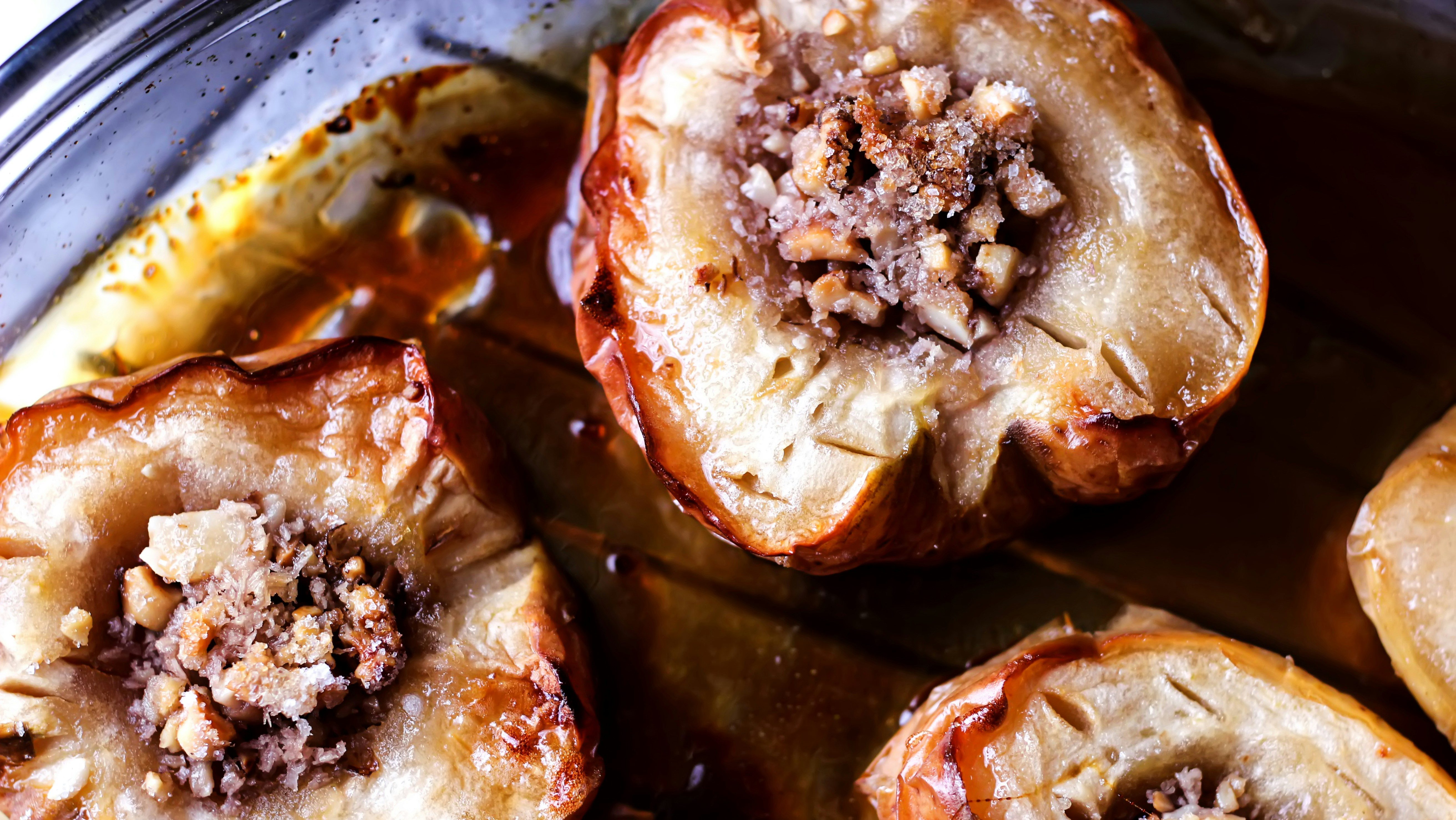
Baked Apples with Honey, Walnuts & Spices
- 4 Medium Apples
- 50g chopped walnuts
- 4 tbsp Honey
- 1 tbsp brown sugar
- 2 tbsp Butter
- 1 tsp Cinnamon, 1/4 tsp nutmeg
- 1/2 tsp vanilla extract
- pinch of salt
- 100ml water / apple juice
Method
1. Prep the apples
- Preheat Oven to 180°C (350°F).
- Wash and core the apples using an apple corer or small knife, leaving the bottom intact so the filling doesn’t leak through.
- Optional: Gently score a shallow ring around the middle of each apple — this helps prevent splitting.
2. Make the filling / Fill the apples
- In a small bowl, mix together: walnuts, honey (and sugar is using) cinnamon, nutmeg, vanilla, and a pinch of salt
- It should be thick and sticky.
- Pack the mixture tightly into the apple cores.
- Place a small piece of butter on top of the filling in each apple.
4. Bake
- Arrange the apples in a baking dish.
- Pour water or apple juice into the base of the dish.
- Bake for 30–40 minutes, spooning the juices over the apples halfway through.
- They’re done when the apples are soft but still holding shape and the filling is bubbling.

This November, Swap convenience for whole ingredients. Cook more. Roast, simmer, blend. Let food be warmth and fuel. Because living well doesn’t need to be complicated—it just needs to be in season.
Thanks for reading.



 The Silvan way
Leave a comment